
Can Mediation Prevent Court?


Do you want to avoid court?

Can Family Mediation Really Prevent Court?
- Child arrangements
- Where children will live
- How much time children spend with each parent
- School holidays and special occasions
- Communication between separated parents
- Parenting plans
- Separation and divorce arrangements
- The family home
- Mortgages
- Savings and investments
- Debts
- Pensions
- Other financial arrangements following separation
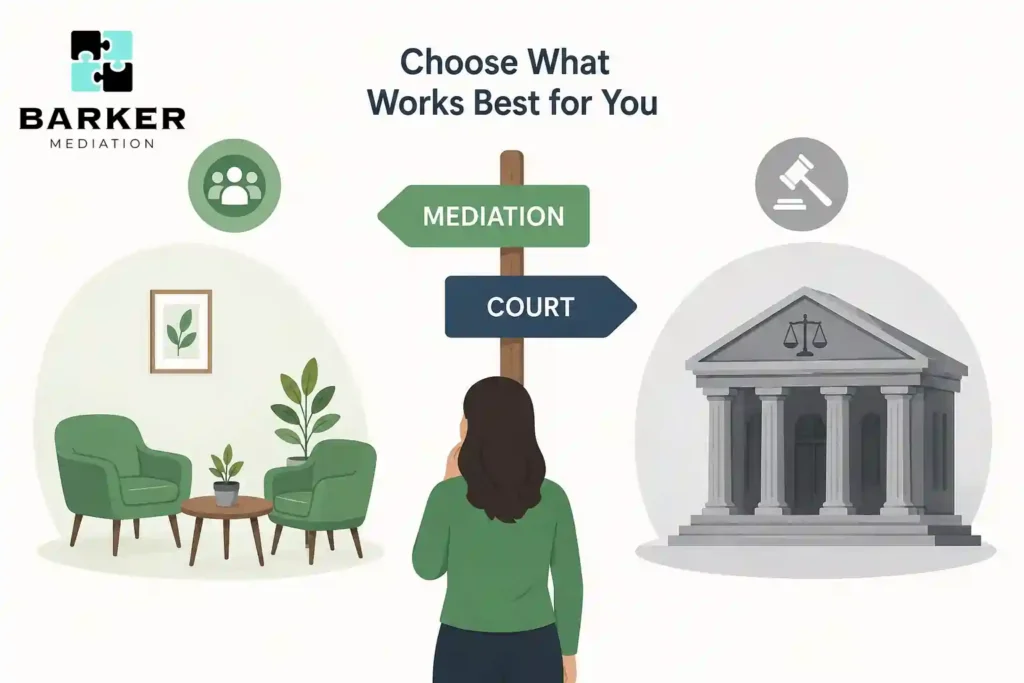
Why Consider Mediation Before Going to Court?
You Keep Control of the Decisions
Mediation Can Reduce Conflict
It Can Be Quicker
It Can Cost Less Than a Contested Court Case
It Can Be Better for Children
- What does our child need?
- How should their time be divided?
- How will holidays work?
- How will important decisions be made?
- How can we communicate more effectively as parents?

Do I Have to Try Mediation Before Going to Family Court?
What Is a MIAM?
- Listen to the circumstances surrounding your dispute.
- Explain how family mediation works.
- Discuss the issues you would like to resolve.
- Consider whether mediation is suitable.
- Discuss alternative ways of resolving the dispute.
- Explain the next steps if mediation does not proceed.
What Happens If We Reach an Agreement in Mediation?
Can Mediation Help With Child Arrangements?
- Where your child should live
- When they should see each parent
- Overnight stays
- Weekends
- School holidays
- Christmas and birthdays
- Taking children abroad
- Schooling
- Communication between parents
- Introducing new partners
- Changes to existing arrangements
Can Mediation Prevent a Child Arrangements Court Case?
Can Mediation Help Prevent Financial Court Proceedings?
- Your home
- Mortgage
- Savings
- Investments
- Pensions
- Businesses
- Debts
- Other assets and liabilities
What If We Only Agree on Some Issues?
- School holiday arrangements
- Weekend contact
- How you will communicate about your children
What If My Ex Refuses to Mediate?

What If We Cannot Be in the Same Room?
When Might Court Still Be Necessary?
- There are urgent safeguarding concerns.
- A child may be at risk.
- Domestic abuse or controlling behaviour makes mediation inappropriate.
- An urgent legal order is required.
- Someone continually refuses to provide necessary information.
- One person will not engage in mediation or another suitable dispute-resolution process.
- An agreement cannot be reached.
- A court needs to determine a particular legal issue.
Can We Use Solicitors and Mediation Together?
- Attend mediation to explore possible arrangements.
- Take independent legal advice between sessions.
- Return to mediation to continue negotiations.
- Reach proposals you are both comfortable with.
- Ask a solicitor to prepare any necessary legal documentation.
Mediation Even After Court Has Been Mentioned
- Someone has threatened court proceedings.
- Solicitors are already involved.
- A court application is being considered.
- You have attended a MIAM.
- Previous negotiations have broken down.
- Existing arrangements are no longer working.
Why Choose Barker Mediation?
- Child arrangements
- Separation and divorce
- Financial arrangements
- Property
- Pensions
- Parenting plans
- Grandparent contact
- Online mediation
- Shuttle mediation
- MIAM appointments
Could Mediation Help You Avoid Court?
Frequently Asked Questions About Mediation and Court
Can mediation guarantee that we won’t have to go to court?
No. Mediation cannot guarantee that court proceedings will never be necessary.
However, when both participants engage with the process and can reach an agreement, mediation can often remove the need for a judge to determine the dispute through contested proceedings.
Is mediation legally binding?
The discussions and proposals reached in family mediation are not automatically legally binding.
Depending on the type of agreement, you can obtain legal advice about having your proposals incorporated into legally binding documentation, such as a consent order.
Do I legally have to mediate before going to court?
You are not generally required to reach an agreement through mediation.
However, before making certain family court applications involving children or finances in England and Wales, applicants will normally need to attend a MIAM unless a recognised exemption applies.
What happens if my ex refuses mediation?
You can still arrange and attend your own MIAM.
Where appropriate, the mediator can invite the other person to attend their own meeting. If mediation cannot proceed, your mediator can explain the relevant next steps.
Can my ex use mediation to delay me going to court?
Mediation should not be used to create unreasonable delays.
If there is an urgent matter or an immediate safety concern, the mediator can discuss whether mediation is appropriate and whether an exemption from the usual MIAM requirement may apply.
Can we mediate if solicitors are already involved?
Yes. Having solicitors does not prevent you from mediating.
You can obtain independent legal advice throughout the mediation process while using mediation to conduct negotiations.
Can mediation stop court proceedings that have already started?
Mediation can sometimes still be explored once proceedings have begun.
If an agreement is reached, it may reduce the issues the court needs to consider or remove the need for further contested hearings. You should obtain legal advice about your particular proceedings.
Can mediation help if we disagree about our children?
Yes. Mediation can help parents discuss where children live, how they spend time with each parent, holidays, schooling, communication, parenting plans and other practical arrangements.
Can mediation deal with money as well as children?
Yes. Financial mediation can cover issues including property, mortgages, savings, pensions, investments, debts and other financial arrangements following separation or divorce.
Will the mediator decide who is right?
No.
A family mediator is independent and impartial. Their role is not to judge either participant or decide the outcome.
They help you identify the issues, communicate constructively, explore options and work towards your own proposals.
What if we agree about everything except one issue?
You can still benefit from mediation.
Reaching agreement on most of the dispute can substantially reduce the issues that remain unresolved. You can then consider the most appropriate way of dealing with the outstanding point.
Is mediation suitable where there has been domestic abuse?
Not every case is suitable for mediation.
Domestic abuse, coercive control, safeguarding concerns and other power imbalances are considered carefully during the individual assessment process.
Where mediation is not safe or appropriate, other routes may need to be considered.
Do we have to sit in the same room?
Not necessarily.
Where suitable, options such as online or shuttle mediation may allow participants to communicate through the mediator without sitting together in the same room or in an online meeting.